<img height="1" width="1" style="display:none" src="https://www.facebook.com/tr?id=2297599040530378&amp;ev=PageView&amp;noscript=1">
Skip to content

Access Your Home Equity With a Georgia Cash-Out Refinance

Metro Atlanta has added jobs and residents for years, and home values across Georgia have followed. A cash-out refinance gives owners a way to draw on those gains through one mortgage at a fixed payment.

What Is a Cash-Out Refinance in Georgia?

A cash-out refinance helps Georgia homeowners unlock their home equity by replacing their current mortgage with a new, larger loan. After your existing mortgage and closing costs are paid, the remaining amount is yours in cash at closing.

Years of growth in metro Atlanta and across the state have given many Georgia homeowners substantial equity to draw on. A home purchased years ago in Buckhead, Alpharetta, Decatur, or Savannah may now have hundreds of thousands of dollars in available equity.

A cash-out refinance rolls everything into one loan with one monthly payment. Because your new mortgage reflects current market rates, take time to consider the new payment, how much equity you want to keep, and what you plan to do with the proceeds.

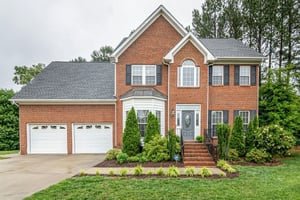
Georgia home with equity for a cash-out refinance

Why Georgia Homeowners Trust LendFriend With Their Cash-Out Refinance

Homeowners rely on LendFriend Mortgage for cash-out refinances, which are among the loans we arrange most often. We help owners put their equity to use across Georgia, including Buckhead, Sandy Springs, Alpharetta, Milton, Decatur, and Marietta. From intown Atlanta homes to estates in North Fulton and lake houses on Oconee and Lanier, we help owners find competitive cash-out refinance rates and financing shaped by what the funds are for.

Choices include conventional 30-year fixed mortgages, 7/1 and 10/1 ARMs, and Non-QM loans for business owners, corporate executives, retirees, and investors whose income or assets sit outside traditional lending guidelines.

Cash-Out Refinance Options Beyond the Conventional Loan

A conventional cash-out refinance works for a large number of Georgia homeowners. Others, including veterans, owners of high-value homes, and the self-employed, may find a stronger fit in a different program:

  • Jumbo cash-out refinances allow eligible owners in higher-priced Atlanta neighborhoods to borrow beyond the loan amounts available through conventional programs.
  • Bank statement loans allow eligible business owners and independent professionals to qualify through bank deposits rather than tax returns alone.
  • Asset depletion loans allow eligible retirees and high-net-worth borrowers to qualify using brokerage and retirement assets without liquidating them.
  • VA cash-out refinances and VA jumbo cash-out refinances allow eligible veterans and service members to draw on the equity in a primary residence.
  • DSCR loans can help rental owners take cash out based on the property's lease income instead of personal income.

Georgia borrowers benefit from this range. An executive at Delta or Home Depot with stock compensation, a film-industry business owner, or a retiree in Alpharetta may have meaningful equity and assets that traditional income documentation leaves out.

Competitive Georgia Cash-Out Refinance Rates and Fast Closings

Rate and fee differences are easy to overlook and costly over the life of a large mortgage. LendFriend works with more than 40 wholesale lenders, so Georgia homeowners see competitive cash-out refinance rates, low lender fees, and programs for many loan amounts, equity levels, and financial profiles.

We also recognize that a renovation contract, a purchase, or a business investment often comes with a deadline. LendFriend offers same-day preapprovals and can close many cash-out refinances in as little as 14 days, helping homeowners across metro Atlanta, Savannah, and the rest of Georgia move forward on time.

Estimate how much cash you could borrow.

Email Icons (3)

Determine your home equity.

Consider a Georgia home appraised at $850,000 with $325,000 remaining on the loan.

$850,000 – $325,000 = $525,000

The equity in the home is $525,000.

Calculator (1)

Calculate your maximum loan amount.

Conventional lenders usually permit a loan-to-value ratio, abbreviated LTV, of 80% on a cash-out refinance.

$850,000 × 80% LTV = $680,000

Here the maximum refinance loan amount would be $680,000.

Home loan

Estimate the cash you could borrow.

From the new loan amount, take away the balance being paid off. Closing costs reduce the figure slightly.

$680,000 – $325,000 = $355,000

Roughly $355,000 could be available.

Need help structuring your Georgia cash-out refinance?

Start with a conversation. A loan specialist will estimate your home's value, outline the programs you qualify for, and show the cash and payment for each.

Strategic Uses for Cash-Out Funds in Georgia

Georgia borrowers put cash-out proceeds toward growth more often than toward emergencies. Homes, rentals, and businesses account for most of what we see.

Popular Uses for Cash-Out Funds:

Renovations and Additions

Families in established Atlanta neighborhoods often expand rather than move. A cash-out refinance funds the primary suite, the basement finish, or the carriage house in one draw.

Rental Property Purchases

Population growth supports steady rental demand across the metro area. Owners use home equity for a down payment, and investors with rentals in place may refinance them with a DSCR loan in Georgia that looks to the lease income.

A Lake or Coastal Home

Lake Oconee, Lake Lanier, and the Golden Isles draw second-home buyers from Atlanta. Equity from the primary residence commonly covers the down payment.

Debt Payoff

High-rate balances on cards and personal loans can be rolled into the mortgage. The monthly obligation often drops, and the debt gains a fixed end date.

Business and Professional Practices

Owners draw on home equity to open a second location, buy out a partner, or purchase the building they lease.

Education and Reserves

Tuition, a wedding, or a larger emergency fund are common secondary uses. Cash on hand reduces the need for high-cost credit later.

Good uses share one trait: the return or the savings is larger than the cost of borrowing. We check your plan against that standard.

Costs and Benefits Analysis

Budget 2% to 5% of the loan amount for closing costs. In Georgia the total includes an intangibles tax on the new mortgage and a closing attorney's fee, in addition to the appraisal and title insurance.

Consider the rate you would give up. Where the existing mortgage is well below the market, a different choice among your refinance options may protect it.

Look at the payment last. It will be higher than before, and it should remain a comfortable share of your monthly income.

Cash-Out Refinance Programs for Georgia Homeowners

Georgia borrowers have more than one way to qualify for a cash-out refinance. We weigh the programs below against your income, assets, and property to find the right match.

Conventional Cash-Out Refinances in Georgia

Conventional Cash-Out Refinances in Georgia

Georgia owners with steady, documented income typically begin with a conventional cash-out refinance. It is offered on primary residences, second homes, and rental properties.

Learn More

Jumbo Cash-Out Refinances in Georgia

Jumbo Cash-Out Refinances in Georgia

Jumbo programs fit higher-priced homes in Buckhead, Milton, and around the lakes. Underwriting centers on credit, reserves, and remaining equity.

Learn More

Bank Statement Loans in Georgia

Bank Statement Loans in Georgia

Georgia business owners and independent professionals can use bank statements to qualify. A 12 or 24 month deposit history takes the place of tax returns.

Learn More

VA Cash-Out Refinances in Georgia

VA Cash-Out Refinances in Georgia

Eligible Georgia veterans and service members may borrow against a primary residence through the VA program. There is no monthly mortgage insurance.

Learn More

Asset Depletion Mortgages in Georgia

Asset Depletion Mortgages in Georgia

Georgia retirees and high-net-worth borrowers may qualify on account balances rather than wages. No investments need to be sold.

Learn More

Crypto Mortgages in Georgia

Crypto Mortgages in Georgia

Georgia borrowers may count eligible cryptocurrency toward qualification and stay invested. Lenders review digital assets with the rest of the file.

Learn More

DSCR Loans in Georgia

DSCR Loans in Georgia

Georgia rental owners may refinance and take cash out on the strength of the lease income. Personal tax returns are not needed.

Learn More

No-Ratio Loans in Georgia

No-Ratio Loans in Georgia

A Georgia primary residence may be refinanced with no debt-to-income calculation. Lenders look to credit, equity, and reserves.


Learn More

Georgia Home (2)

When a Georgia Cash-Out Refinance Makes Sense

Sustained appreciation makes the math work. In Buckhead, Sandy Springs, and Johns Creek, owners who qualify for jumbo loans in Atlanta may refinance and take cash while keeping a strong equity cushion.

High-value homes outside the perimeter follow the same path. A jumbo cash-out refinance is underwritten to the standards that apply to Georgia jumbo loans, with added attention to reserves.

Most Georgia refinances involve standard loan amounts, and the full list of programs appears among our Georgia home loans.

Ideal Conditions for Cash-Out Refinancing:

  • Clear gains in home value since you bought or last refinanced
  • A new rate you find acceptable for the long term
  • Steady income and credit in good standing
  • A planned, productive use of the money
  • A higher payment that still fits your budget

The more of these conditions you meet, the more favorable your terms are likely to be.

Georgia Cash-Out Refinance Requirements

Lenders look closely at cash-out applications because the loan amount increases. A credit score of 620 is a typical floor for conventional loans, and better scores bring better rates.

Qualifying income can take several forms. Executives and retirees with sizable portfolios may use an asset depletion loan in Georgia. Entrepreneurs may qualify with bank statement loans in Georgia based on 12 or 24 months of deposits.

Georgia closings are conducted by an attorney. From application to funding, most refinances take 30 to 45 days.

Key Qualification Factors:

  • Credit score of 620 or above, with stronger pricing at 700 and up
  • Debt-to-income ratio within program limits, commonly under 50%
  • About 20% equity remaining once the loan closes
  • Consistent income or sufficient assets
  • Funds available for closing costs

We give you a realistic read on each factor before any fees are paid.

Historic homes in Savannah, Georgia

How Georgia Homeowners Use a Cash-Out Refinance

These examples show the kinds of cash-out refinances we arrange for Georgia homeowners. Details are illustrative.

Buckhead Retiree Buys a Lake Oconee Home With Equity

A retired executive in Buckhead owed $300,000 on a $2.2M home and wanted about $1.1M to buy a house on Lake Oconee. Pension and investment income fell short of the bank's formula. We used an asset depletion loan to count the investment accounts and closed a $1.4M mortgage.

Alpharetta Business Owner Opens a Second Location

A business owner in Alpharetta owed $500,000 on a $1.3M home and needed roughly $400,000 to open a second location. Write-offs kept the income on the tax returns low. We used a bank statement loan based on company deposits and closed a $900,000 mortgage.

Milton Executive Funds a Renovation and Tuition

A corporate executive in Milton owed $750,000 on a $1.7M home and wanted about $450,000 for a renovation and upcoming tuition. The bank discounted the stock compensation that made up much of the pay. We placed a $1.2M jumbo cash-out refinance with a lender that recognized it.

Decatur Investor Takes $250K Out of a Rental

An investor owed $300,000 on a $750,000 rental home in Decatur and wanted funds for another property. Qualifying on personal income would have meant months of paperwork. We closed a $550,000 DSCR loan based on the lease income.

BORROWER TESTIMONIALS

What Homeowners Say About Their Cash-Out Refinance With LendFriend Mortgage

See what homeowners say about taking cash out of their home equity with LendFriend Mortgage, including refinances closed on a tight timeline.

Georgia Cash-Out Refinance FAQs

How much cash can I get from a cash-out refinance in Georgia?

Conventional programs generally allow a new loan up to 80% of your home's appraised value. Subtract your current balance and closing costs to find the cash you would receive.

Can Georgia veterans use a VA cash-out refinance?

Yes. Veterans and service members with entitlement may refinance a primary residence and take cash out. A VA cash-out refinance in Georgia may permit borrowing against more of the home's value than a conventional loan.

Can I qualify for a cash-out refinance in Georgia using my assets?

Yes. Borrowers with substantial savings may qualify without employment income. Jumbo asset depletion loans in Fulton County show how lenders convert account balances into income on high-value homes.

Can self-employed borrowers get a jumbo cash-out refinance in Georgia?

Yes. Business owners may document income through deposits instead of tax returns. Jumbo bank statement loans in Fulton County extend that approach to larger loan amounts.

Can I refinance using home equity instead of traditional income?

Yes. Certain Non-QM programs focus on equity and assets. A cash-out refinance using home equity may suit owners with limited monthly income and significant property value.

Can I roll closing costs into a Georgia cash-out refinance?

Yes. A no-closing-cost refinance adds the costs to the balance or trades them for a slightly higher rate. Less cash is needed at closing as a result.

How does a HELOC compare with a cash-out refinance?

A HELOC adds a second loan with a variable rate, and a cash-out refinance creates one fixed loan. Homeowners deciding between a HELOC and a cash-out refinance should look at their current rate first.

Can I take cash out of an investment property in Georgia?

Yes. Rental properties qualify, generally at a lower loan-to-value ratio than owner-occupied homes. Investors often reinvest the funds in additional properties.

What credit score do I need for a Georgia cash-out refinance?

A 620 score is the usual starting point for conventional loans. Jumbo and Non-QM programs have their own requirements.

Can I take cash out of a second home in Georgia?

Yes. Lake and coastal homes are eligible, and owners often use the cash for upgrades or a down payment elsewhere. Cash-out refinancing on a second home generally carries a lower maximum loan-to-value ratio than a primary residence.

Understand Your Georgia Cash-Out Refinance Options

Find expert insights on Georgia cash-out refinancing, including loan requirements, equity limits, current mortgage rates, and practical ways to use your home's equity. Our Learning Center helps you evaluate your options and decide with confidence.

Contact us today to start your Georgia Cash-Out Refinance.

3-Sep-02-2024-03-11-26-3988-PM

Stronger Negotiating Position when Buying a Home 

The equity in your current home is unlocked and used as a downpayment on your new home; meaning no sales contingency required! Sellers HATE sales contingencies. Without a sales contingency, your offer is stronger, increasing your chances of buying your next home with ease.

4-3

Get the Highest and Best Sale Price

Without feeling pressured to sell quickly, you can wait for the best offer on your current home. List your home at the best time, market it effectively, and attract more competitive offers. With no rush, you can negotiate better terms and get the highest selling price.

1-1

Reduced Stress

Don't worry about finding temporary housing or organizing multiple moves. Avoid the chaos of having to coordinate the sale of your current home and the purchase of a new one. Transition seamlessly from one home to another and reduce stress or anxiety, making the moving process more manageable and organized.

2-4

Time for Improvements

Make necessary renovations or updates to your new property before you move in. Painting, remodeling, or other improvements would be more challenging if you were already living there. Moving into a freshly updated home (instead of living in it during renovations) is just so much nicer!